The Sovereign Imperative: Why Nations Must Own Their Intelligence Stack.
August 11, 2026 · 4 min read
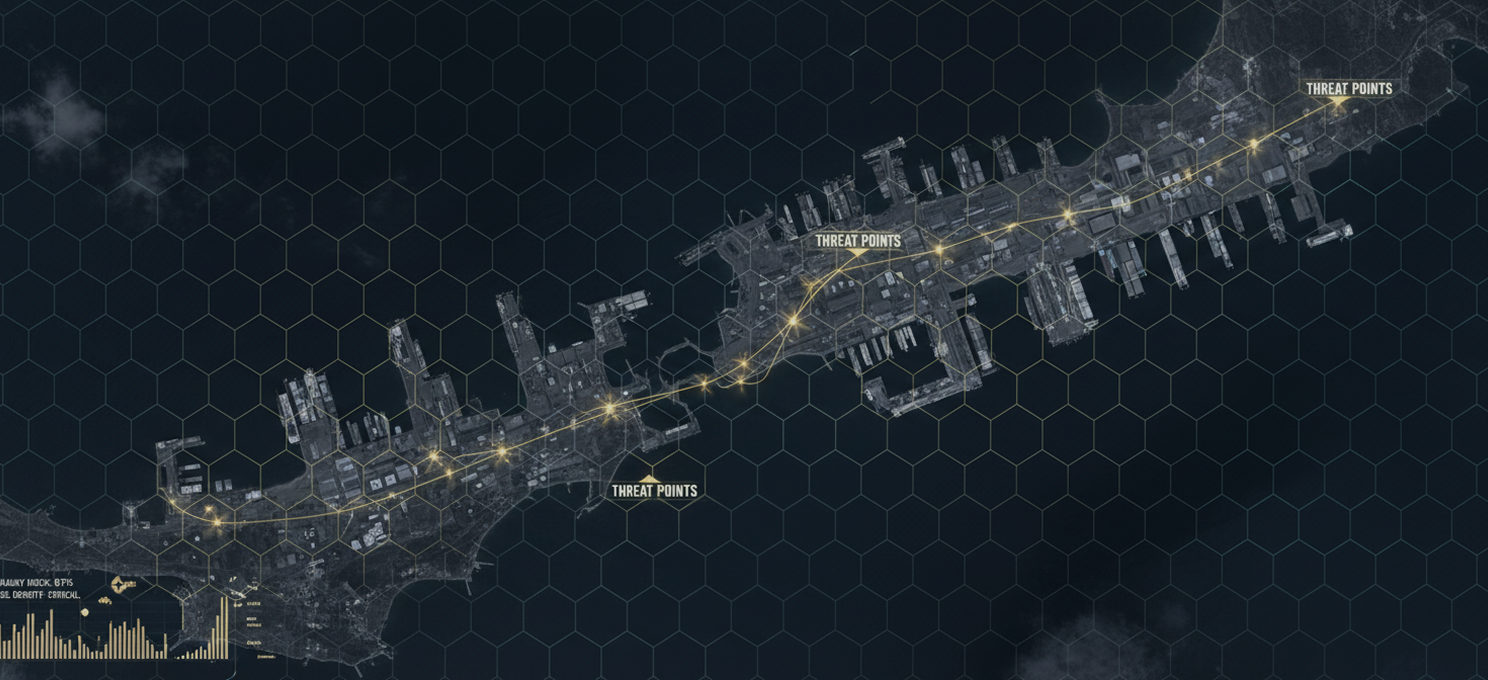
For nations operating in an increasingly automated security environment, control over AI infrastructure, intelligence systems, sovereign data, and computational capabilities is becoming a critical component of national security and strategic autonomy.
1. The Illusion of Shared Defense Architecture
The AI era operates at an entirely different speed.
With automated cyber operations, real-time intelligence processing, and AI-driven narrative shaping, the friction built into traditional intelligence-sharing systems can become a strategic failure point. Relying on API endpoints owned by foreign entities—no matter how friendly—means that strategic reactions operate at their latency and remain bound by their compliance parameters.
This creates a fundamental challenge for intelligence sovereignty. A nation may possess the data and analytical expertise required to understand a threat, yet still remain dependent on infrastructure it does not control. The broader question of how states maintain control over critical intelligence and AI capabilities is increasingly central to AI sovereignty.
When a threat event unfolds at high speed, the pipeline responsible for processing raw signals must belong to the sovereign state. If critical intelligence infrastructure resides outside national borders, access can be restricted by external decisions during the minutes when sovereignty is being tested.
2. Technical Autonomous Isolation (TAI)
These systems consist of deep signal-processing nodes that physically reside within sovereign borders and operate using localized AI models. These models must be trained on sovereign data, ensuring that sensitive state information is not exposed to external model-training datasets or third-party AI infrastructure.
TAI provides a framework for building AI sovereignty around three core principles.
Physical Compute Sovereignty — High-performance processing hardware should be hosted within heavily guarded domestic facilities. Keeping critical compute infrastructure within national borders ensures that the processing of sensitive intelligence remains under sovereign control.
Closed-Loop Model Architecture — Neural networks should update their weights using sovereign signal streams without relying on external internet-based feedback loops. This creates a more controlled AI intelligence infrastructure and reduces the risk of sensitive information flowing into external systems.
Algorithmic Attribution Independence — States require independent capabilities to conduct deepfake detection, generative-audio analysis, signal tracing, and other forms of algorithmic attribution without exposing sensitive queries or intelligence requirements to external providers.
This independence is increasingly important as artificial intelligence becomes embedded in information operations, cyber activity, and modern intelligence analysis.
3. Why Intelligence Sovereignty Matters
As AI accelerates the intelligence cycle, dependence on foreign infrastructure can become a strategic liability. A state that relies on external providers for critical compute, models, APIs, or intelligence-processing infrastructure may retain nominal ownership of its data while losing practical control over how that data is processed.
That is the core challenge of intelligence sovereignty in the AI era.
Sovereign control over compute, models, data, and signal-processing pipelines is therefore becoming increasingly important to maintaining national security, strategic autonomy, and technological sovereignty.
The future of national intelligence will not be determined solely by who has the best models. It will increasingly be determined by who owns the infrastructure on which those models operate. This is where intelligence infrastructure and AI-enabled systems such as Varro become increasingly relevant to how states process, interpret, and act on information.
Continue Reading

Larry Ellison Cancels $7.5 Billion Oracle Share Sale
Ellison's decision comes as Oracle pushes deeper into AI infrastructure while investors watch its spending and cash flow.

GPT-6 Astra Is Here. What Changes Now?
OpenAI’s latest model marks a shift from AI that answers questions to AI that can act on them.

EU Designates ChatGPT as a Very Large Online Search Engine Under the DSA
ChatGPT faces stricter EU oversight as AI becomes critical information infrastructure.