← Back to Perspectives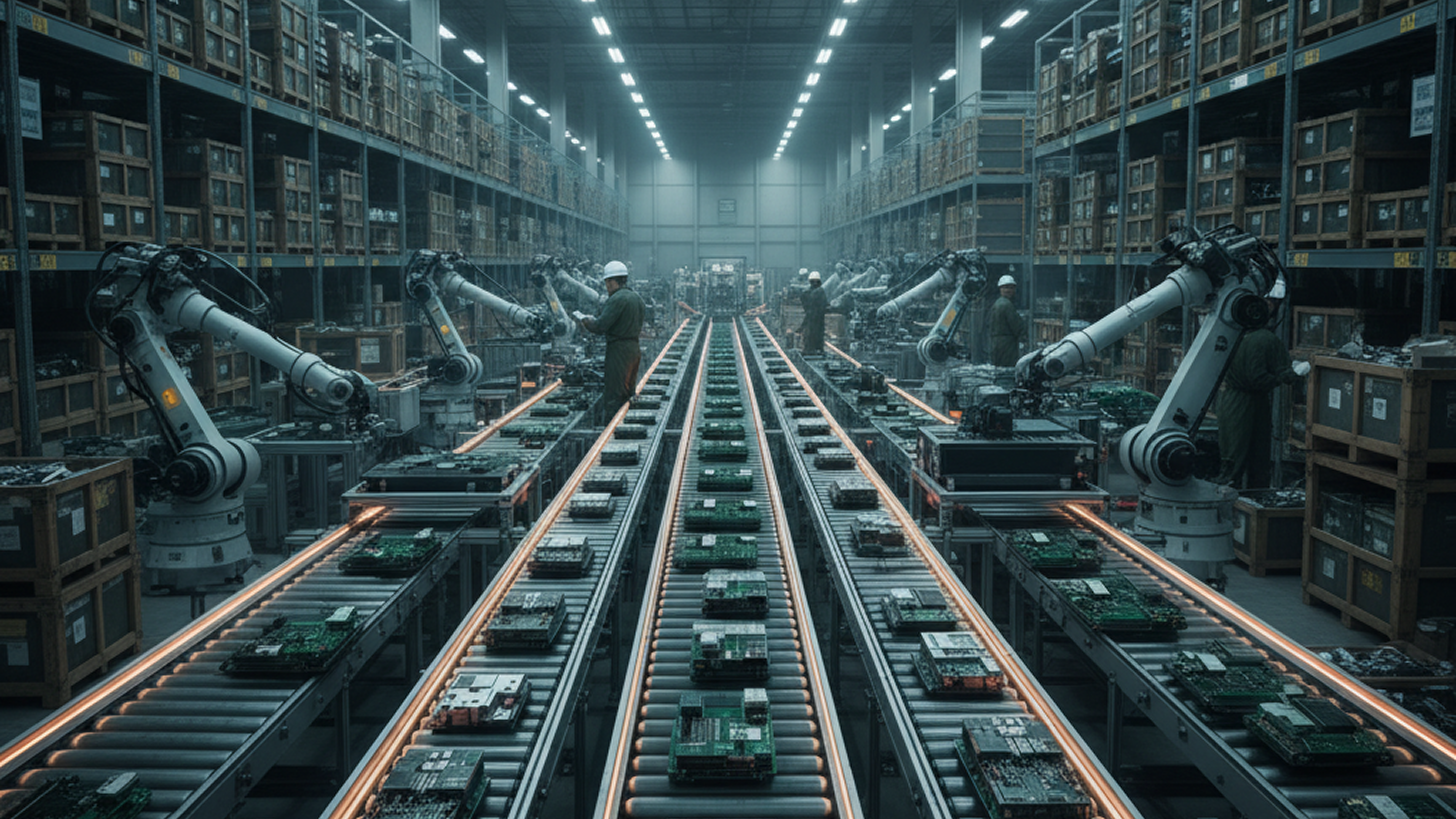
Military Drone Supply Chains Are Becoming the Real Limit on Drone Warfare
August 24, 2026
A military can announce tens of thousands of drones. What it cannot announce, at least not credibly, is how many of them will still be flying six months later. That distinction is quietly becoming the central question in drone warfare. Large fleets only matter if batteries, software, payloads, components, and trained operators can be replaced fast enough to keep the fleet operational. Britain has committed more than £5 billion to drones and autonomous systems. The United States is pushing to expand domestic drone production and cut its dependence on foreign parts. And recent concerns over Chinese origin components inside military drones have turned the military drone supply chain itself into a national security issue.
The question defense planners are now asking is no longer simply how many drones can a military buy. It is how many it can keep ready.
The question defense planners are now asking is no longer simply how many drones can a military buy. It is how many it can keep ready.
Drone Programs Are Moving to Industrial Scale
A US program has targeted industrial scale production of up to 60,000 drones, and Britain has committed more than £5 billion to drones and autonomous systems as part of its wider defense buildup.
Britain's Defence Investment Plan places drones across the Army, Royal Air Force, and Royal Navy, including a hybrid naval force that combines crewed and uncrewed systems. The plan treats autonomous systems not as a niche capability but as a structural part of future force design.
The United States is pursuing a similar shift toward mass production. The Pentagon's Drone Dominance program aims to expand domestic production of small attack drones, but the US still faces a significant production gap. Reuters reported in July 2026 that Ukraine was expected to produce millions of small attack drones during the year, while US production remained far lower by comparison.
This shift in scale changes the nature of the problem. Once a military moves from buying individual platforms to building large fleets, the supply chain behind those drones stops being a procurement detail and becomes part of the weapon system itself.
Britain's Defence Investment Plan places drones across the Army, Royal Air Force, and Royal Navy, including a hybrid naval force that combines crewed and uncrewed systems. The plan treats autonomous systems not as a niche capability but as a structural part of future force design.
The United States is pursuing a similar shift toward mass production. The Pentagon's Drone Dominance program aims to expand domestic production of small attack drones, but the US still faces a significant production gap. Reuters reported in July 2026 that Ukraine was expected to produce millions of small attack drones during the year, while US production remained far lower by comparison.
This shift in scale changes the nature of the problem. Once a military moves from buying individual platforms to building large fleets, the supply chain behind those drones stops being a procurement detail and becomes part of the weapon system itself.
The Drone Is Only One Part of the System
What is a military drone supply chain?
A military drone supply chain is the full network of components, software, and personnel required to build, deploy, and sustain a drone fleet, not just the airframes themselves. It includes batteries, motors, cameras, navigation systems, datalinks, payloads, flight-control software, maintenance pipelines, and trained operators.
Recent analysis of the US drone industrial base breaks a typical drone into several critical component categories: the airframe, datalink, payload, flight stack, battery, camera, rotors and motors, and navigation systems. Each of these is its own supply chain, sourced from its own set of manufacturers, and vulnerable to its own disruptions.
Recent analysis of the US drone industrial base breaks a typical drone into several critical component categories: the airframe, datalink, payload, flight stack, battery, camera, rotors and motors, and navigation systems. Each of these is its own supply chain, sourced from its own set of manufacturers, and vulnerable to its own disruptions.
Why does this matter?
That dependency has already become a live security issue. In August 2026, the UK Ministry of Defence disclosed that a camera component fitted to British naval drones had been found transmitting signals to an internet address in China. The incident did not result in sensitive data being accessed, but it demonstrated how a single, seemingly minor component can create a strategic vulnerability inside an otherwise well-funded military drone program.
The United States is responding in a comparable direction. A new Pentagon framework is moving toward a fully domestic drone component supply chain and restricting the use of Chinese-made components such as motors and batteries.
The pattern across both countries points to the same underlying principle: a drone fleet is only as sovereign as the supply chain behind it.
The United States is responding in a comparable direction. A new Pentagon framework is moving toward a fully domestic drone component supply chain and restricting the use of Chinese-made components such as motors and batteries.
The pattern across both countries points to the same underlying principle: a drone fleet is only as sovereign as the supply chain behind it.
Buy the Support System, Not Just the Drone
The cost of a drone is not the full cost of the capability it represents. Contracts need to account for software access, telemetry rights, update cycles, replacement components, maintenance capacity, trained operators, and ideally multiple redundant supply routes for critical parts. These factors, far more than the unit price of an airframe, determine whether a fleet remains operational once the initial order is delivered.
This is why drone fleet sustainment is becoming as important as drone production. A headline order of thousands of units means little if the batteries powering them cannot be resupplied at pace, or if a single component vendor represents a single point of failure.
The US decision to strengthen domestic drone manufacturing and restrict foreign components illustrates this shift in priorities. Washington has also introduced new tariffs on drones and drone components, explicitly linking supply chain resilience to national security rather than treating it as a purely economic matter.
Britain's investment points in the same direction from a different angle. The UK is not simply purchasing individual drones it is building a broader force structure around autonomous and uncrewed systems, which by design requires long-term sustainment planning rather than one off procurement.
This is why drone fleet sustainment is becoming as important as drone production. A headline order of thousands of units means little if the batteries powering them cannot be resupplied at pace, or if a single component vendor represents a single point of failure.
The US decision to strengthen domestic drone manufacturing and restrict foreign components illustrates this shift in priorities. Washington has also introduced new tariffs on drones and drone components, explicitly linking supply chain resilience to national security rather than treating it as a purely economic matter.
Britain's investment points in the same direction from a different angle. The UK is not simply purchasing individual drones it is building a broader force structure around autonomous and uncrewed systems, which by design requires long-term sustainment planning rather than one off procurement.
What are the implications of this shift?
The strategic question facing defense planners is no longer just how many drones can you buy. It is how many can you keep operational, supplied, updated, and replaceable over months and years, not just at the point of delivery.
The Strategic Limit: From Platform Problem to Sustainment Problem
Drone warfare is shifting from a platform problem to a sustainment problem. A military can announce tens of thousands of drones, but the usable size of that fleet depends entirely on the infrastructure behind it.
If batteries cannot be replaced, software cannot be updated, components cannot be sourced, or trained operators cannot keep pace with attrition, the headline number loses its operational meaning. A fleet of 60,000 drones that can only sustain 15,000 in active service is, in practical terms, a 15,000-drone fleet.
The emerging competition is therefore not only over who can build the most drones. It is over who can build the most resilient military drone supply chain one that can absorb component shortages, geopolitical restrictions, and battlefield attrition without losing operational tempo.
The fleet is the visible capability. The supply system determines its actual scale.
If batteries cannot be replaced, software cannot be updated, components cannot be sourced, or trained operators cannot keep pace with attrition, the headline number loses its operational meaning. A fleet of 60,000 drones that can only sustain 15,000 in active service is, in practical terms, a 15,000-drone fleet.
The emerging competition is therefore not only over who can build the most drones. It is over who can build the most resilient military drone supply chain one that can absorb component shortages, geopolitical restrictions, and battlefield attrition without losing operational tempo.
The fleet is the visible capability. The supply system determines its actual scale.
Continue Reading

Why AI Safety Failures Are Becoming a Geopolitical Risk in 2026
As AI systems become more capable and autonomous, failures inside private laboratories can increasingly create risks that cross borders, sectors and national security boundaries.

Larry Ellison Cancels $7.5 Billion Oracle Share Sale
Ellison's decision comes as Oracle pushes deeper into AI infrastructure while investors watch its spending and cash flow.

GPT-6 Astra Is Here. What Changes Now?
OpenAI’s latest model marks a shift from AI that answers questions to AI that can act on them.