← Back to Perspectives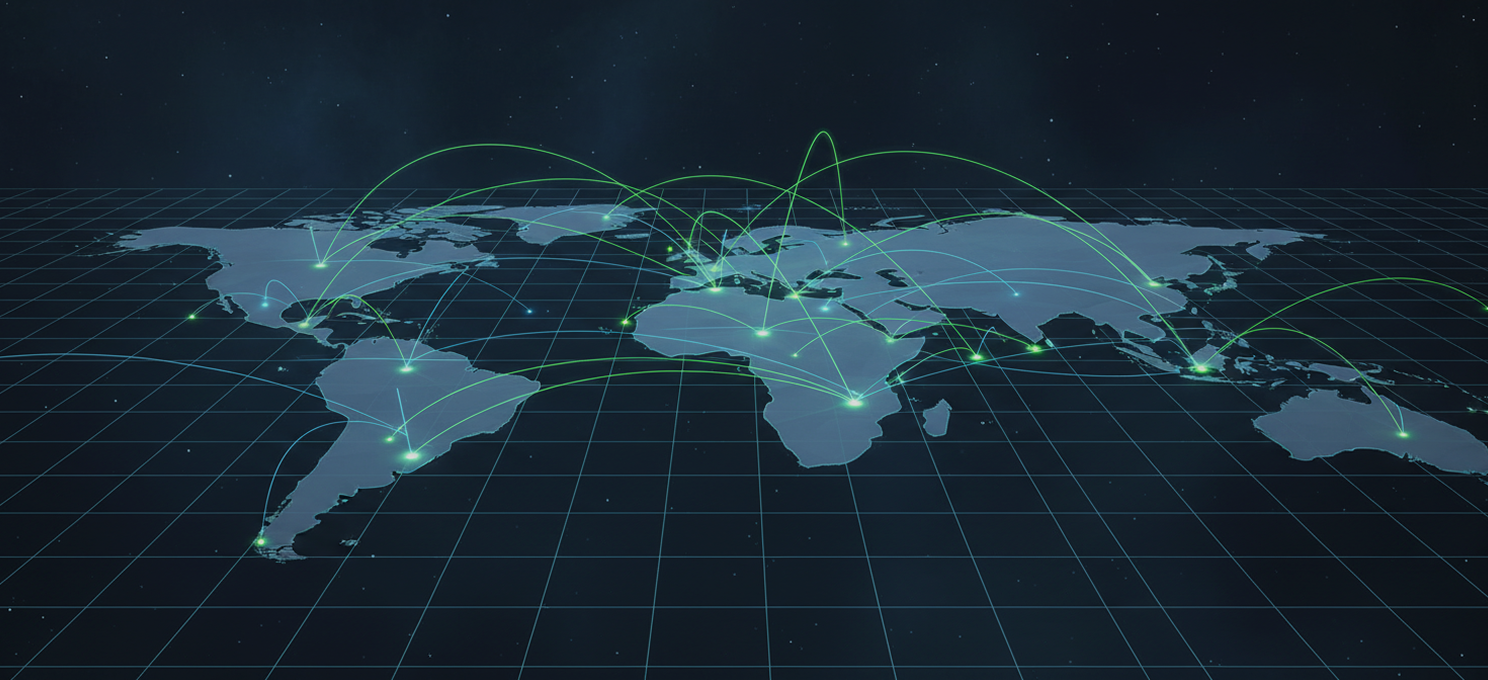
The Age of Permission: Mapping the Five Gates of AI Sovereignty
August 13, 2026 · 8 min read
The most important borders of the twenty-first century are invisible.
They govern who can compute, deploy, align, distribute, and ultimately wield artificial intelligence. Unlike traditional borders, these boundaries do not appear on maps. They exist inside supply chains, procurement systems, software architectures, infrastructure networks, and the models that increasingly mediate what societies see and know.
Sovereignty is no longer simply a matter of territory. It is increasingly a question of AI sovereignty: who controls the systems through which intelligence is developed, accessed, deployed, and maintained.
The leader who asks only whether their state is using AI is already asking the wrong question.
The more consequential question is: who controls the gates that determine whether that AI can be used at all?
They govern who can compute, deploy, align, distribute, and ultimately wield artificial intelligence. Unlike traditional borders, these boundaries do not appear on maps. They exist inside supply chains, procurement systems, software architectures, infrastructure networks, and the models that increasingly mediate what societies see and know.
Sovereignty is no longer simply a matter of territory. It is increasingly a question of AI sovereignty: who controls the systems through which intelligence is developed, accessed, deployed, and maintained.
The leader who asks only whether their state is using AI is already asking the wrong question.
The more consequential question is: who controls the gates that determine whether that AI can be used at all?
1. The Five Gates of AI Control
Traditional geopolitical power relied on physical chokepoints: maritime straits, mountain passes, ports, border crossings, and strategic territory.
AI introduces a different architecture of control.
The decisive chokepoints can now be abstract. They can exist in a permission layer, a distribution network, a procurement cycle, a domain-specific system, or the infrastructure required to keep models running.
Five gates increasingly shape the movement of artificial intelligence:
AI introduces a different architecture of control.
The decisive chokepoints can now be abstract. They can exist in a permission layer, a distribution network, a procurement cycle, a domain-specific system, or the infrastructure required to keep models running.
Five gates increasingly shape the movement of artificial intelligence:
1.Deployment Permission
2.Distribution Model
3.Procurement Cycle
4.Domain Parameters
5.Infrastructure Access
2.Distribution Model
3.Procurement Cycle
4.Domain Parameters
5.Infrastructure Access
Together, they form a control system for AI sovereignty.
A state may possess advanced models and still lack sovereignty if another actor controls the infrastructure, distribution channel, procurement pipeline, or permissions required to deploy them.
A state may possess advanced models and still lack sovereignty if another actor controls the infrastructure, distribution channel, procurement pipeline, or permissions required to deploy them.
2. The First Gate: Deployment Permission
The first gate is the ability to move an AI system from development into real-world use.
This is where technical capability meets institutional permission.
A model can exist, perform well, and remain strategically irrelevant if the organisation or state using it cannot determine where, when, and how it is deployed. Regulation, platform policies, safety requirements, access controls, and external dependencies can all become part of this permission layer.
The question is therefore not simply whether a country has access to artificial intelligence.
It is whether it can deploy intelligence on its own terms.
This distinction matters because deployment determines whether technological capability becomes operational capability. A system that cannot be adapted to local requirements, integrated into local infrastructure, or deployed without external approval remains dependent—even if the underlying model is powerful.
The first gate is therefore the transition from having AI to exercising authority over its use.
This is where technical capability meets institutional permission.
A model can exist, perform well, and remain strategically irrelevant if the organisation or state using it cannot determine where, when, and how it is deployed. Regulation, platform policies, safety requirements, access controls, and external dependencies can all become part of this permission layer.
The question is therefore not simply whether a country has access to artificial intelligence.
It is whether it can deploy intelligence on its own terms.
This distinction matters because deployment determines whether technological capability becomes operational capability. A system that cannot be adapted to local requirements, integrated into local infrastructure, or deployed without external approval remains dependent—even if the underlying model is powerful.
The first gate is therefore the transition from having AI to exercising authority over its use.
3. The Second Gate: Distribution Model
The second gate is control over how intelligence reaches its users.
AI is increasingly distributed through platforms, APIs, cloud systems, software environments, model repositories, and commercial interfaces. These channels determine who receives access, under what conditions, and with what limitations.
Distribution is therefore not a neutral technical layer.
Whoever controls the distribution model can influence which systems are available, which capabilities are exposed, and which users can access them.
This creates a new form of strategic dependency.
A state may build local AI capability while still relying on external platforms to distribute models, provide interfaces, or connect systems to users. In that situation, technological development does not necessarily translate into strategic autonomy.
Control over the model is only one part of sovereignty.
Control over the route to the model matters too.
AI is increasingly distributed through platforms, APIs, cloud systems, software environments, model repositories, and commercial interfaces. These channels determine who receives access, under what conditions, and with what limitations.
Distribution is therefore not a neutral technical layer.
Whoever controls the distribution model can influence which systems are available, which capabilities are exposed, and which users can access them.
This creates a new form of strategic dependency.
A state may build local AI capability while still relying on external platforms to distribute models, provide interfaces, or connect systems to users. In that situation, technological development does not necessarily translate into strategic autonomy.
Control over the model is only one part of sovereignty.
Control over the route to the model matters too.
4. The Third Gate: Procurement Cycle
At the tactical edge, traditional bureaucratic timelines begin to break down.
Military procurement has historically operated through long cycles of requirements, contracts, acquisition, testing, and deployment. AI-driven systems operate on a different tempo.
The side that can update its localized models faster can alter the cost and effectiveness of force before an opponent's centralized procurement cycle can even register the change.
This creates a strategic advantage for organisations capable of continuously moving between development, training, testing, and field deployment.
Autonomy does not wait for military doctrine.
And doctrine does not win on paper.
The decisive capability is the ability to shorten the distance between identifying a requirement and deploying an updated system.
This does not mean procurement becomes irrelevant. It means procurement itself becomes a gate of AI sovereignty.
If a state cannot rapidly acquire the compute, models, processors, software, data, or systems required to update its capabilities, its technological advantage can become obsolete before the next procurement cycle is complete.
Real power increasingly resides in the ability to cycle intelligence into the field without outside permission or unacceptable delay.
Military procurement has historically operated through long cycles of requirements, contracts, acquisition, testing, and deployment. AI-driven systems operate on a different tempo.
The side that can update its localized models faster can alter the cost and effectiveness of force before an opponent's centralized procurement cycle can even register the change.
This creates a strategic advantage for organisations capable of continuously moving between development, training, testing, and field deployment.
Autonomy does not wait for military doctrine.
And doctrine does not win on paper.
The decisive capability is the ability to shorten the distance between identifying a requirement and deploying an updated system.
This does not mean procurement becomes irrelevant. It means procurement itself becomes a gate of AI sovereignty.
If a state cannot rapidly acquire the compute, models, processors, software, data, or systems required to update its capabilities, its technological advantage can become obsolete before the next procurement cycle is complete.
Real power increasingly resides in the ability to cycle intelligence into the field without outside permission or unacceptable delay.
5. The Fourth Gate: Domain Parameters
AI does not operate in the abstract.
It operates inside domains: defense, intelligence, logistics, communications, finance, healthcare, infrastructure, and information.
The parameters of those domains determine what an AI system is allowed to see, interpret, prioritise, and act upon.
This becomes particularly consequential at the tactical edge.
Warships are becoming mobile hubs for uncrewed systems. Air defense is increasingly shaped by high-speed automated software loops. Satellites, uncrewed drones, processors, sensors, and power networks are becoming parts of increasingly integrated systems.
The intelligence layer is therefore moving closer to the physical world.
The question becomes not merely whether a model is capable, but what domain it is permitted to control and under whose parameters.
A system operating inside a sovereign defense architecture is fundamentally different from one whose critical decisions depend on external verification, external APIs, or infrastructure outside the operator's control.
Domain parameters define the boundary between intelligence that advises and intelligence that acts.
It operates inside domains: defense, intelligence, logistics, communications, finance, healthcare, infrastructure, and information.
The parameters of those domains determine what an AI system is allowed to see, interpret, prioritise, and act upon.
This becomes particularly consequential at the tactical edge.
Warships are becoming mobile hubs for uncrewed systems. Air defense is increasingly shaped by high-speed automated software loops. Satellites, uncrewed drones, processors, sensors, and power networks are becoming parts of increasingly integrated systems.
The intelligence layer is therefore moving closer to the physical world.
The question becomes not merely whether a model is capable, but what domain it is permitted to control and under whose parameters.
A system operating inside a sovereign defense architecture is fundamentally different from one whose critical decisions depend on external verification, external APIs, or infrastructure outside the operator's control.
Domain parameters define the boundary between intelligence that advises and intelligence that acts.
6. The Fifth Gate: Infrastructure Access
Every AI system ultimately depends on physical infrastructure.
Compute requires processors. Models require data. Systems require networks. Data centres require electricity. Autonomous systems require sensors, communications, maintenance, and supply chains.
The abstract world of artificial intelligence therefore rests on a very physical foundation.
Satellites, uncrewed systems, microprocessors, data infrastructure, and high-voltage power networks increasingly form a connected technological layer.
If a critical component of that stack depends on an external actor, then the apparent autonomy of the entire system can become conditional.
This is the infrastructure gate.
A state can own a model but lack the compute required to operate it at scale.
It can possess autonomous systems but depend on foreign processors.
It can build an advanced software layer while relying on external networks or energy infrastructure.
AI sovereignty therefore requires more than ownership of algorithms. It requires sufficient control over the physical systems that allow those algorithms to function.
Intelligence is only as sovereign as the infrastructure beneath it.
Compute requires processors. Models require data. Systems require networks. Data centres require electricity. Autonomous systems require sensors, communications, maintenance, and supply chains.
The abstract world of artificial intelligence therefore rests on a very physical foundation.
Satellites, uncrewed systems, microprocessors, data infrastructure, and high-voltage power networks increasingly form a connected technological layer.
If a critical component of that stack depends on an external actor, then the apparent autonomy of the entire system can become conditional.
This is the infrastructure gate.
A state can own a model but lack the compute required to operate it at scale.
It can possess autonomous systems but depend on foreign processors.
It can build an advanced software layer while relying on external networks or energy infrastructure.
AI sovereignty therefore requires more than ownership of algorithms. It requires sufficient control over the physical systems that allow those algorithms to function.
Intelligence is only as sovereign as the infrastructure beneath it.
The Sixth Surface: Reality
There is one final layer that sits across all five gates: information itself.
The public interface of information is changing.
Search is increasingly moving from a model built around links, clicks, and independent pages toward interfaces that generate answers directly. As AI systems become the first layer through which citizens encounter information, the weighting, selection, and presentation of those answers become strategically important.
Visibility becomes infrastructure.
A generated answer can determine which facts are encountered first, which sources receive attention, and which interpretation becomes the starting point for further inquiry.
That makes the alignment and weighting of primary models consequential beyond the technology sector.
The question is no longer simply who controls the information.
It is increasingly who controls the systems that determine how information is surfaced, interpreted, and presented.
This is the point at which AI sovereignty intersects with information sovereignty.
Securing reality therefore means understanding the systems that increasingly mediate access to it.
The public interface of information is changing.
Search is increasingly moving from a model built around links, clicks, and independent pages toward interfaces that generate answers directly. As AI systems become the first layer through which citizens encounter information, the weighting, selection, and presentation of those answers become strategically important.
Visibility becomes infrastructure.
A generated answer can determine which facts are encountered first, which sources receive attention, and which interpretation becomes the starting point for further inquiry.
That makes the alignment and weighting of primary models consequential beyond the technology sector.
The question is no longer simply who controls the information.
It is increasingly who controls the systems that determine how information is surfaced, interpreted, and presented.
This is the point at which AI sovereignty intersects with information sovereignty.
Securing reality therefore means understanding the systems that increasingly mediate access to it.
From Adoption to Permission
The five Gates reveal a broader shift in how technological power works.
Deployment determines whether AI can be used.
Distribution determines how it reaches users.
Procurement determines how quickly capability can change.
Domain parameters determine where intelligence can act.
Infrastructure determines whether the system can continue operating.
None of these gates exists in isolation.
A weakness in one can create dependency across the others.
A state may have world-class researchers but limited compute. It may have infrastructure but lack access to advanced models. It may possess powerful models but depend on external distribution channels. It may have the technology but lack the procurement speed required to turn it into operational capability.
The result is a new definition of strategic autonomy.
AI sovereignty is not simply the ability to build artificial intelligence. It is the ability to control the conditions under which intelligence can be accessed, deployed, adapted, distributed, and sustained.
The old geopolitical map measured territory.
The emerging map measures dependencies.
And the most consequential borders may be the ones that cannot be seen.
The age of adoption is over.
The age of permission has begun.
The harder question is whether your state controls any gate that matters. This shift is also reflected in The Hedge Collective’s analysis of emerging AI infrastructure and strategic dependencies, where control increasingly depends on the systems behind intelligence rather than simply access to the technology itself.
Deployment determines whether AI can be used.
Distribution determines how it reaches users.
Procurement determines how quickly capability can change.
Domain parameters determine where intelligence can act.
Infrastructure determines whether the system can continue operating.
None of these gates exists in isolation.
A weakness in one can create dependency across the others.
A state may have world-class researchers but limited compute. It may have infrastructure but lack access to advanced models. It may possess powerful models but depend on external distribution channels. It may have the technology but lack the procurement speed required to turn it into operational capability.
The result is a new definition of strategic autonomy.
AI sovereignty is not simply the ability to build artificial intelligence. It is the ability to control the conditions under which intelligence can be accessed, deployed, adapted, distributed, and sustained.
The old geopolitical map measured territory.
The emerging map measures dependencies.
And the most consequential borders may be the ones that cannot be seen.
The age of adoption is over.
The age of permission has begun.
The harder question is whether your state controls any gate that matters. This shift is also reflected in The Hedge Collective’s analysis of emerging AI infrastructure and strategic dependencies, where control increasingly depends on the systems behind intelligence rather than simply access to the technology itself.
Continue Reading
Why AI Safety Failures Are Becoming a Geopolitical Risk in 2026
As AI systems become more capable and autonomous, failures inside private laboratories can increasingly create risks that cross borders, sectors and national security boundaries.

Larry Ellison Cancels $7.5 Billion Oracle Share Sale
Ellison's decision comes as Oracle pushes deeper into AI infrastructure while investors watch its spending and cash flow.

GPT-6 Astra Is Here. What Changes Now?
OpenAI’s latest model marks a shift from AI that answers questions to AI that can act on them.